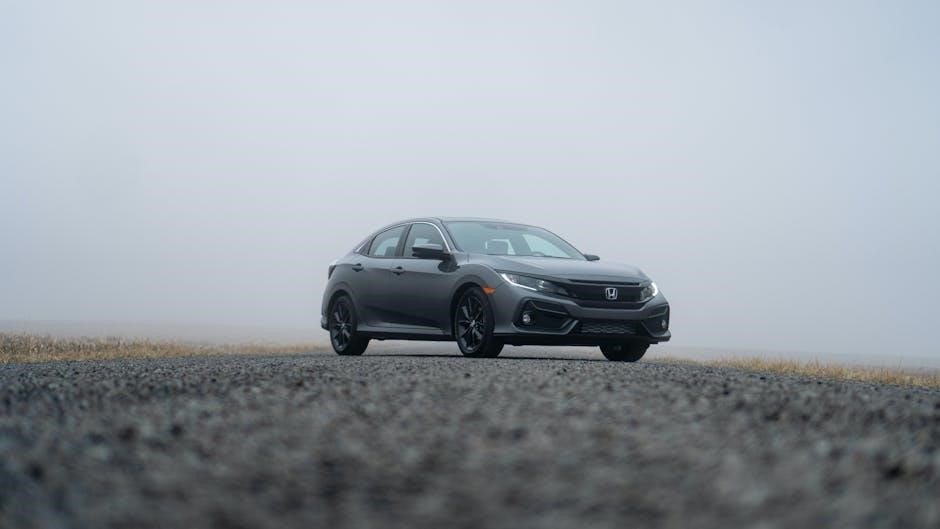
This manual details the 2020 Civic’s operation, maintenance, and safety features. It provides crucial information regarding vehicle systems and diagnostic data uploads to Honda.
Purpose of the Manual
This owner’s manual is designed to familiarize you with your 2020 Honda Civic, ensuring safe and efficient operation. It details features, controls, maintenance schedules, and troubleshooting guidance. Importantly, it explains data recording practices, including information on the Event Data Recorder (EDR) and data potentially uploaded to Honda regarding system performance and safety belt usage upon vehicle startup.
Scope of Information Covered
This manual encompasses all aspects of your 2020 Honda Civic, from basic operation to detailed maintenance procedures. It includes safety features like airbags and collision mitigation, alongside infotainment and climate control systems. Coverage extends to technical specifications, warranty details, and emergency procedures, plus insights into data recording – specifically, how vehicle systems and safety belt status are monitored and potentially shared with Honda.

Vehicle Identification
Locate your 2020 Civic’s unique Vehicle Identification Number (VIN), essential for registration, warranty claims, and identifying specific model and trim levels.
Vehicle Identification Number (VIN) Location
Your 2020 Honda Civic’s 17-digit Vehicle Identification Number (VIN) is crucial for various purposes, including registration, warranty work, and theft recovery. You can find this unique identifier in several locations on your vehicle. Look on the driver’s side dashboard, visible through the windshield. Additionally, it’s located on the driver’s side doorjamb and within your vehicle’s registration and insurance documents.
Model and Trim Levels
The 2020 Honda Civic was offered in a variety of models and trim levels to suit diverse preferences. These included the Civic Sedan, Coupe, and Hatchback. Trim levels ranged from the base LX, to the sporty Si and Touring. Each trim offered increasing levels of features, technology, and refinement, providing options for comfort, performance, and style. Understanding your specific trim level is key to utilizing all your vehicle’s capabilities.
Safety Information
This section covers critical safety features, including proper seat belt usage, child safety seat installation, airbag system functionality, and collision mitigation systems.
Seat Belt Usage
Proper seat belt use is paramount for safety. The 2020 Civic’s manual emphasizes buckling up for every trip, ensuring a secure fit across the hips and chest. Data recorded by the Event Data Recorder (EDR) includes whether safety belts were fastened at vehicle startup. Always use seat belts, and ensure passengers do too, to maximize protection during a collision and comply with legal requirements.
Child Safety Seats
The 2020 Civic owner’s manual provides detailed guidance on proper child safety seat installation. It’s crucial to follow all instructions for securing seats correctly, utilizing LATCH anchors or seat belts. The manual stresses adhering to state and local laws regarding child restraint systems. Always prioritize child passenger safety by selecting the appropriate seat for their age and weight.
Airbag System
The 2020 Honda Civic’s airbag system is a vital safety component. The owner’s manual details the system’s operation, including front, side, and curtain airbags. It emphasizes that airbags supplement seat belts, not replace them. Always ensure proper seatbelt usage. The manual also warns about potential risks and provides guidance on airbag system maintenance and potential deactivation procedures.
Collision Mitigation System
The 2020 Honda Civic features a sophisticated Collision Mitigation System (CMS); This system, detailed in the owner’s manual, utilizes sensors to detect potential collisions. It provides warnings and can even apply the brakes automatically. The manual stresses that CMS is an aid, not a substitute for attentive driving; Understanding its limitations is crucial for safe operation.
Understanding Your Vehicle
This section explains the 2020 Civic’s dashboard, controls, and indicators. Familiarize yourself with these elements for optimal driving and vehicle system awareness.
Dashboard Indicators and Warnings
The 2020 Civic’s dashboard utilizes various lights and symbols to communicate vehicle status. These indicators alert drivers to potential issues, ranging from low fuel to critical system malfunctions. Understanding these warnings is paramount for safe operation.
The manual details each indicator’s meaning, including those related to safety systems like airbags and the Collision Mitigation System.
It also explains how diagnostic and maintenance information, including safety belt usage, may be recorded and uploaded to Honda.
Instrument Panel Overview
The 2020 Civic’s instrument panel presents vital vehicle information at a glance. It displays speed, engine RPM, fuel level, and various warning indicators. The multi-information display provides customizable data, including trip information and Honda Sensing alerts.
Understanding the layout and function of each gauge is crucial for monitoring vehicle performance. Data regarding system operation, including safety belt status, can be recorded.
Steering Wheel Controls
The 2020 Civic’s steering wheel integrates controls for audio, phone, cruise control, and Honda Sensing features. These allow convenient operation without diverting attention from driving. Buttons manage volume, track selection, and call answering. Lane keeping assist and adaptive cruise control settings are also accessible. Familiarize yourself with these controls for safe and efficient operation;

Operating Your Vehicle
This section covers starting, stopping, driving modes, and fueling procedures. Understanding these aspects ensures safe and efficient operation of your 2020 Honda Civic.
Starting and Stopping the Engine
Before starting, ensure the parking brake is engaged and the gear selector is in Park (P). Insert the key or press the start/stop button while firmly pressing the brake pedal. To stop the engine, simply press the start/stop button again, or shift the gear selector to Park (P) and turn the ignition key to the OFF position. Always allow the engine to idle briefly before shutting it off.
Driving Modes
The 2020 Civic may offer various driving modes, such as Normal, Eco, and Sport. Eco mode prioritizes fuel efficiency by adjusting throttle response and transmission shifting. Sport mode enhances performance with a more responsive engine and steering. Normal mode provides a balanced driving experience for everyday use, optimizing both fuel economy and performance.
Fueling Information
The 2020 Honda Civic typically requires unleaded gasoline with an octane rating of 87. Always consult the fuel filler door for specific recommendations. Avoid using fuels containing ethanol exceeding 10%, as it may damage the vehicle. Ensure the fuel cap is securely tightened after each fill-up to prevent fuel vapor emissions.
Maintenance Schedule
Regular maintenance, including oil changes and fluid checks, is vital for optimal performance. Refer to the manual for detailed intervals and service recommendations.
Recommended Oil Changes
Maintaining proper oil levels and adhering to the recommended change intervals are crucial for your 2020 Honda Civic’s engine longevity. The owner’s manual provides a detailed schedule based on normal and severe driving conditions. Generally, oil changes are suggested every 7,500 to 10,000 miles using the recommended oil type specified within the manual.
Tire Maintenance
Proper tire maintenance is essential for safety and optimal performance of your 2020 Honda Civic. Regularly check tire pressure – including the spare – and inflate to the recommended PSI found on the tire placard. Inspect tires for wear, damage, and ensure even tread depth. Rotate tires as per the maintenance schedule to prolong their lifespan.
Fluid Level Checks
Regularly checking fluid levels is crucial for your 2020 Honda Civic’s health. Inspect engine oil, coolant, brake fluid, power steering fluid, and windshield washer fluid. Ensure levels are within the indicated range on the dipsticks or reservoirs. Low fluid levels can indicate leaks or potential system failures, requiring immediate attention and repair.

Features and Functions
The 2020 Civic boasts an infotainment system, Honda Sensing Suite, and a climate control system, enhancing driving comfort and safety for all passengers.
Infotainment System
The 2020 Honda Civic’s infotainment system provides connectivity and entertainment features. It may include a touchscreen display, Bluetooth connectivity for hands-free calling and audio streaming, and smartphone integration like Apple CarPlay and Android Auto. Users can access navigation, audio controls, and vehicle settings through this system. Diagnostic information, including system operation, can be recorded and potentially uploaded to Honda, offering insights into vehicle performance and usage patterns.
Honda Sensing Suite
The Honda Sensing suite is a collection of advanced safety and driver-assistive technologies. Features often include Collision Mitigation Braking System, Road Departure Mitigation System, Adaptive Cruise Control, and Lane Keeping Assist System. Data regarding the operation of these systems, and whether safety belts were fastened, may be recorded and uploaded to Honda for diagnostic and improvement purposes, ensuring driver and passenger safety.
Climate Control System
The 2020 Civic’s climate control system provides heating, cooling, and ventilation for passenger comfort. It features adjustable temperature settings and fan speeds. Operation of this system, along with other vehicle functions, generates data potentially recorded by the Event Data Recorder. This diagnostic information may be uploaded to Honda for analysis and future improvements.

Troubleshooting
This section addresses common issues and explains warning light meanings. It assists owners in diagnosing problems, potentially related to systems uploading data to Honda.
Common Issues and Solutions
Addressing typical concerns, this guide offers solutions for issues owners might encounter with their 2020 Civic. These range from infotainment system glitches to dashboard indicator confusion. Remember, certain diagnostic information, including safety belt usage, is recorded and potentially uploaded to Honda. Consult this section for initial troubleshooting steps before seeking professional service, ensuring a smoother ownership experience and understanding of vehicle data practices.
Warning Light Meanings
Understanding dashboard indicators is crucial for safe 2020 Civic operation. This section details each warning light, explaining its significance and recommended actions. From engine malfunctions to low fuel levels, clarity is key. Note that data regarding system operation, including safety features, may be recorded. Prompt attention to warning lights prevents potential damage and ensures continued vehicle reliability, alongside awareness of data recording practices.
Technical Specifications
This section outlines the 2020 Civic’s engine, transmission, dimensions, and weight details. Precise specifications are provided for informed understanding of vehicle capabilities.
Engine Specifications
The 2020 Honda Civic offers several engine options, including a 2.0-liter inline-4 producing 158 hp and 138 lb-ft of torque. A turbocharged 1.5-liter inline-4 is also available, delivering 174 hp and 177 lb-ft. Both engines utilize i-VTEC valve control for optimized performance and efficiency. Fuel recommendations and detailed engine component information are further detailed within this manual for comprehensive understanding.
Transmission Specifications
The 2020 Honda Civic features transmission choices including a Continuously Variable Transmission (CVT) for enhanced fuel economy and smooth operation. A 6-speed manual transmission is also offered on select trims, providing a more engaging driving experience. Detailed specifications regarding gear ratios, fluid types, and maintenance schedules for each transmission are outlined within this owner’s manual for optimal performance and longevity.
Dimensions and Weight
The 2020 Honda Civic’s dimensions vary slightly depending on the body style – sedan or hatchback. Key measurements include overall length, width, and height, crucial for parking and storage considerations. Curb weight also differs based on trim level and transmission choice, impacting handling and fuel efficiency. Detailed specifications are provided within this manual.

Warranty Information
This section outlines the 2020 Civic’s basic and powertrain warranty coverage details, including durations and what components are protected against defects.
Basic Warranty Coverage
The 2020 Honda Civic’s basic warranty typically covers defects in materials or workmanship for a specified period. Generally, this includes 3 years/36,000 miles, whichever comes first, for most vehicle components. Coverage extends to repairs or replacements needed to correct manufacturing flaws. This doesn’t include wear items or damage from misuse, but provides peace of mind during initial ownership. Refer to the official warranty booklet for complete details and exclusions.
Powertrain Warranty
The 2020 Honda Civic’s powertrain warranty offers extended coverage for critical components. Typically, this spans 5 years/60,000 miles, safeguarding the engine, transmission, and drivetrain. It protects against defects in these core systems, ensuring long-term reliability. Regular maintenance, as outlined in the owner’s manual, is crucial for warranty validity. Specific terms and conditions are detailed in the official warranty documentation.

Data Recording and Privacy
The 2020 Civic utilizes an Event Data Recorder (EDR), capturing vehicle dynamics during critical events and uploading diagnostic data to Honda.
Event Data Recorder (EDR)
The 2020 Honda Civic is equipped with an Event Data Recorder (EDR), a system designed to record data related to vehicle operation during critical events, like crashes. This data includes vehicle speed, braking, steering, and whether safety belts were fastened.
This information is confidential and assists in accident analysis and improving vehicle safety. The EDR’s data is uploaded to Honda, aiding in diagnostic and maintenance improvements.
Data Uploaded to Honda
Certain vehicle data is automatically uploaded to Honda from your 2020 Civic. This includes information about how various systems were functioning, offering diagnostic and maintenance insights. Specifically, data regarding safety belt usage – whether buckled or unfastened for both driver and passenger – is transmitted upon vehicle startup.
This data aids in vehicle improvement and safety analysis.

Emergency Information
This section provides vital contact details for emergencies and roadside assistance, ensuring swift help when needed for your 2020 Honda Civic.
Emergency Contact Information
In case of an accident or breakdown, immediate assistance is crucial. For Honda Roadside Assistance, contact 1-800-506-3351. Emergency services (police, fire, ambulance) should be reached by dialing 911. Keep these numbers readily accessible. This manual also advises documenting incident details for insurance claims and reporting purposes, ensuring a smooth process following any unforeseen event with your 2020 Civic.
Roadside Assistance
Honda provides comprehensive roadside assistance for your 2020 Civic. Contact them at 1-800-506-3351 for services like towing, jump-starts, tire changes, and lockout assistance. Coverage details and limitations are outlined in your warranty information. Utilizing this service ensures prompt help when you’re stranded, offering peace of mind during unexpected vehicle issues on the road.

Additional Resources
Explore the official Honda website for support, FAQs, and downloadable manuals. Access online resources for your 2020 Civic’s specific features and troubleshooting.
Honda Website and Support
For comprehensive assistance with your 2020 Honda Civic, visit the official Honda website. There, you’ll find a wealth of resources, including frequently asked questions addressing common owner concerns.
Downloadable versions of the owner’s manual are readily available in PDF format, allowing for convenient offline access. Furthermore, Honda’s support channels offer direct assistance for specific inquiries or technical issues related to your vehicle’s operation and maintenance.
Frequently Asked Questions (FAQ)
Common questions regarding the 2020 Honda Civic often center around the infotainment system’s functionality and Honda Sensing Suite features. Owners frequently inquire about accessing diagnostic data and understanding uploaded vehicle information.
Other typical queries involve maintenance schedules, specifically oil change intervals and tire pressure recommendations. The Honda website provides answers to these and many other frequently asked questions, offering quick solutions for common owner concerns.
Index
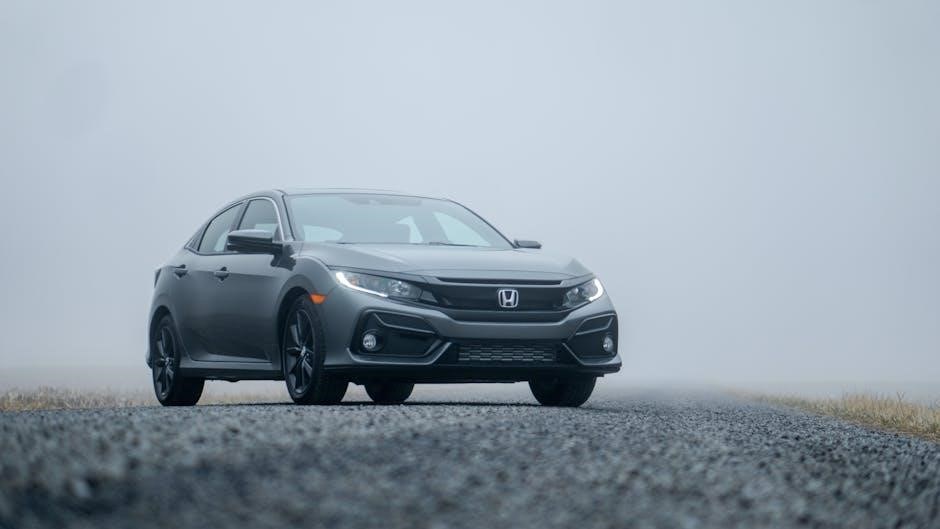
An alphabetical listing of topics within this 2020 Honda Civic owner’s manual is provided for easy navigation and quick reference to specific information.
Alphabetical Listing of Topics
A – Airbag System, Audio System; C – Child Safety Seats, Climate Control System, Collision Mitigation System; D – Dashboard Indicators, Data Recording, Dimensions; E – Emergency Information, Engine Specifications, Event Data Recorder; F – Fueling Information, Features and Functions; I – Infotainment System, Instrument Panel; M – Maintenance Schedule, Model and Trim Levels; O – Operating Your Vehicle; S – Safety Information, Seat Belt Usage; T – Tire Maintenance, Troubleshooting, Technical Specifications; V – Vehicle Identification Number, VIN Location; W – Warranty Information.