Understanding IT Band Syndrome
IT band syndrome frequently impacts active individuals, particularly runners, manifesting as pain on the knee’s outer side, often worsening during activity and requiring management strategies.
What is the IT Band?
The iliotibial (IT) band is a thick band of fibrous tissue that extends along the outside of the thigh, from the hip to just below the knee. Contrary to common belief, it isn’t a muscle itself, but rather a strong piece of fascia – a connective tissue crucial for stabilizing the knee during running and other physical activities.
This band plays a vital role in hip abduction, extension, and external rotation, as well as knee extension. While generally resilient, repetitive friction between the IT band and the lateral femoral epicondyle (the bony prominence on the outside of the knee) can lead to inflammation and pain, ultimately resulting in IT band syndrome. Understanding its structure and function is key to comprehending how issues arise and how to address them effectively.
Causes of IT Band Syndrome
IT band syndrome typically arises from repetitive friction as the IT band rubs against the outer knee. Several factors contribute to this, often stemming from overuse or improper biomechanics. Increasing training intensity or duration too quickly – “pounding the pavement harder than usual” – is a common trigger.
Running form deficiencies, such as overpronation or inadequate hip and gluteal muscle strength, can exacerbate the issue. Tightness in the IT band itself, quadriceps, or hamstrings also plays a role. Inadequate warm-up routines and inappropriate footwear can further contribute to the development of this condition. Essentially, any activity that repeatedly stresses the IT band increases the risk of inflammation and pain.
Common Symptoms
The hallmark symptom of IT band syndrome is pain located on the outer side of the knee. This pain often begins as a dull ache during activity, gradually intensifying to a sharp, burning sensation. Many describe it as “a nagging pain” that worsens with continued running or cycling. A “popping” or “snapping” sensation may also be felt as the IT band moves over the knee joint.
Initially, discomfort might only occur during exercise, but it can progress to pain at rest. The area around the knee might become tender to the touch. Runners often find the pain increases with downhill running or during the later stages of a workout. Ignoring these early signals can lead to chronic discomfort and limit activity levels, impacting overall fitness.
Diagnosis of IT Band Syndrome
Accurate diagnosis involves a thorough evaluation to pinpoint the source of knee pain, differentiating IT band syndrome from other potential conditions affecting the joint.
Physical Examination
A comprehensive physical examination is crucial for diagnosing IT band syndrome, beginning with a detailed discussion of the patient’s activity level and pain history. The healthcare professional will likely assess the range of motion in the knee and hip, observing for any limitations or discomfort. Specific tests, such as the Ober’s test, are employed to evaluate the tightness of the iliotibial band; a positive test indicates a tight IT band.
Palpation along the IT band will help identify areas of tenderness. The examiner will also assess for pain reproduction during specific movements, like knee flexion and extension, or while applying pressure to the lateral femoral epicondyle – the bony prominence on the outside of the knee. Observing the patient’s gait can reveal biomechanical issues contributing to the condition. These findings collectively guide the diagnosis and inform the development of a tailored treatment plan.
Ruling Out Other Conditions
Accurate diagnosis necessitates differentiating IT band syndrome from other conditions causing similar knee pain. Meniscal tears, ligament sprains (like the MCL or LCL), and osteoarthritis are key considerations. Imaging studies, such as X-rays, can help rule out structural damage like arthritis or fractures. An MRI might be ordered to assess for meniscal or ligamentous injuries if the clinical presentation suggests them.
Patellofemoral pain syndrome (runner’s knee) can mimic IT band syndrome, requiring careful evaluation of patellar tracking and alignment. Stress fractures, though less common, should also be considered, especially in runners who have rapidly increased their training intensity. A thorough medical history and physical exam, combined with appropriate imaging, are vital for establishing the correct diagnosis and initiating targeted treatment.
IT Band Syndrome Exercises: A Comprehensive Guide
Effective management involves a combination of foam rolling, targeted stretching, and strengthening exercises to address muscle imbalances and alleviate discomfort effectively.
Foam Rolling Exercises
Foam rolling is a self-myofascial release technique crucial for managing IT band syndrome, helping to reduce tension and improve flexibility in the surrounding muscles. It’s not about rolling on the IT band itself, as it’s a tough structure, but rather focusing on the muscles that influence it – the quads, hamstrings, and glutes.
Consistent foam rolling can help break up adhesions and restore proper muscle function. Begin slowly, applying moderate pressure, and gradually increase intensity as tolerated. Remember to breathe deeply during the process. Prioritize quality over quantity, focusing on areas of tenderness. Incorporate foam rolling into your routine before and after exercise for optimal results. It’s a valuable tool for self-care and injury prevention, contributing to a smoother, pain-free running experience.
IT Band Foam Rolling Technique
To effectively foam roll, lie on your side with the foam roller positioned under your outer thigh, just above the knee. Support your upper body with your forearm and the opposite leg bent for stability. Slowly roll from just above the knee to the hip, pausing on any tender spots for 20-30 seconds.
Avoid rolling directly over the bony prominence of the knee. Maintain a controlled pace and breathe deeply throughout the exercise. This technique targets the surrounding muscles, not the IT band itself. Repeat the process 2-3 times on each leg. Remember, discomfort is expected, but sharp pain indicates you should stop. Consistency is key – aim for daily sessions to experience the benefits of reduced tension and improved flexibility.

Quadriceps Foam Rolling
Lie face down with the foam roller positioned under your thighs, focusing on the quadriceps muscles. Support your upper body with your forearms, keeping your core engaged for stability. Slowly roll from just above the knee to the hip flexors, pausing on any tender areas for approximately 30 seconds.
This targets muscle imbalances contributing to IT band issues. Maintain a controlled pace and breathe deeply throughout the exercise. Avoid rolling directly over the kneecap. Repeat the process 2-3 times on each leg. Foam rolling the quads helps release tension and improve flexibility, indirectly supporting IT band health. Consistent application, ideally daily, can significantly contribute to pain reduction and improved range of motion.
Stretching Exercises
Stretching plays a crucial role in managing IT band syndrome by improving flexibility and reducing tension in surrounding muscles. A comprehensive approach includes targeting the IT band itself, as well as the hamstrings and quadriceps. Regular stretching helps restore proper muscle length and biomechanics, alleviating stress on the knee joint.
Consistent stretching, performed gently and without forcing, is key to success. Hold each stretch for 30 seconds, repeating 2-3 times. Prioritize proper form to avoid exacerbating the condition. Incorporate these stretches into your daily routine, especially after activity, to promote recovery and prevent recurrence. Remember to listen to your body and stop if you experience sharp pain.
IT Band Stretch
To perform an effective IT band stretch, stand with the affected side closer to a wall or sturdy object for support. Cross the affected leg behind the other, then lean towards the wall, keeping your back straight and core engaged. You should feel a stretch along the outside of your hip and thigh.

Hold this position for approximately 30 seconds, repeating 2-3 times. Avoid bouncing or jerking movements, as this can worsen irritation. Another variation involves lying on your back and pulling your knee across your body towards the opposite shoulder. This targets the IT band from a different angle. Consistency is vital; perform this stretch daily for optimal results.
Hamstring Stretch
Tight hamstrings can contribute to IT band syndrome, so incorporating hamstring stretches is crucial. A common method is the towel stretch: lie on your back with one leg extended. Loop a towel around the foot of the extended leg and gently pull, keeping your knee as straight as comfortably possible. Hold for 30 seconds, repeating 2-3 times per leg.
Alternatively, perform a standing hamstring stretch by placing your heel on a slightly elevated surface and leaning forward from the hips, maintaining a straight back. Remember to avoid rounding your spine. Regular hamstring stretching improves flexibility and reduces strain on the IT band, aiding in recovery and prevention.
Quadriceps Stretch
Strengthening and stretching the quadriceps muscles are vital components of IT band syndrome rehabilitation. A standard quadriceps stretch involves standing and holding your foot towards your buttock, keeping your knees close together. Gently pull your heel closer to your glutes, feeling a stretch in the front of your thigh. Hold this position for 20-30 seconds, repeating 2-3 times on each leg.
Another effective stretch is performed lying on your side, grabbing your top foot and pulling it towards your glutes. Ensure your hips remain stable throughout the movement. Consistent quadriceps stretching enhances flexibility, reduces muscle imbalances, and alleviates tension that can exacerbate IT band issues, promoting optimal knee function.
Strengthening Exercises

Strengthening the muscles surrounding the hip and knee is crucial for addressing IT band syndrome, as weakness in these areas can contribute to imbalances. Focus on exercises targeting the gluteus maximus, hip abductors, and core. A strong foundation in these muscle groups helps stabilize the pelvis and lower limbs, reducing stress on the IT band.
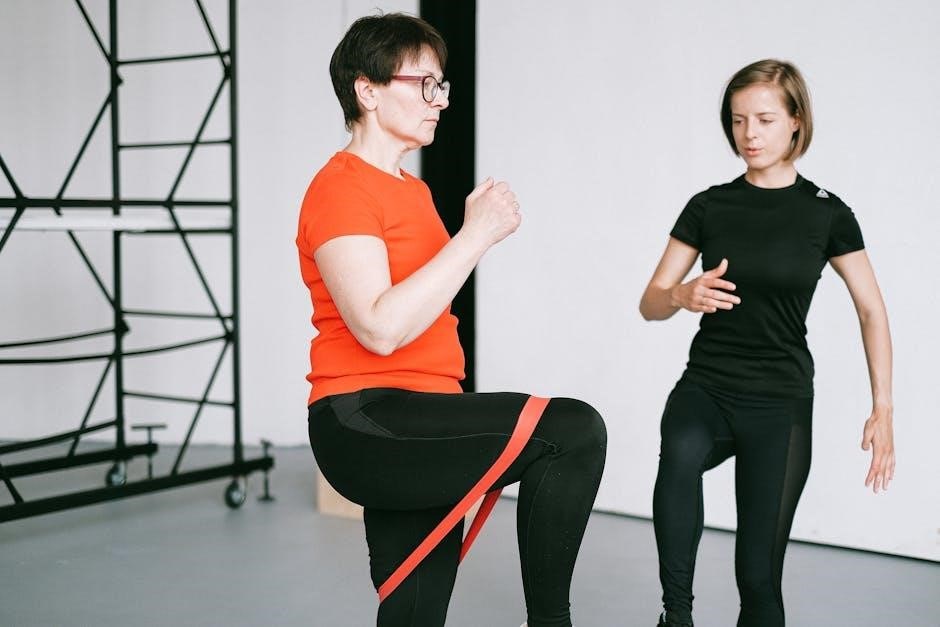
Effective exercises include hip abduction with resistance bands, side-lying leg raises, and glute bridges. Core strengthening, such as planks and bird-dogs, enhances overall stability. Incorporating these exercises 2-3 times per week, alongside stretching and foam rolling, will contribute to a comprehensive recovery plan and prevent future occurrences of IT band syndrome.
Gluteus Maximus Strengthening
A weak gluteus maximus significantly contributes to IT band syndrome, as it impacts pelvic stability and proper biomechanics during movement. Strengthening this muscle helps control hip extension and external rotation, reducing strain on the IT band. Effective exercises include glute bridges – performed by lying on your back with bent knees and lifting your hips off the ground.
Single-leg glute bridges increase the challenge. Hip thrusts, utilizing a bench for support, are also highly effective. Incorporate these exercises 2-3 times weekly, focusing on controlled movements and proper form. Aim for 3 sets of 10-15 repetitions. Consistent gluteus maximus strengthening is vital for long-term IT band health and preventing recurrence of symptoms.
Hip Abductor Strengthening
Weak hip abductors – muscles responsible for moving your leg away from the midline – contribute to poor pelvic control and increased stress on the IT band. Strengthening these muscles is crucial for stabilizing the pelvis during running and other activities. Effective exercises include side-lying leg raises, performed by lifting your leg while keeping your body straight.
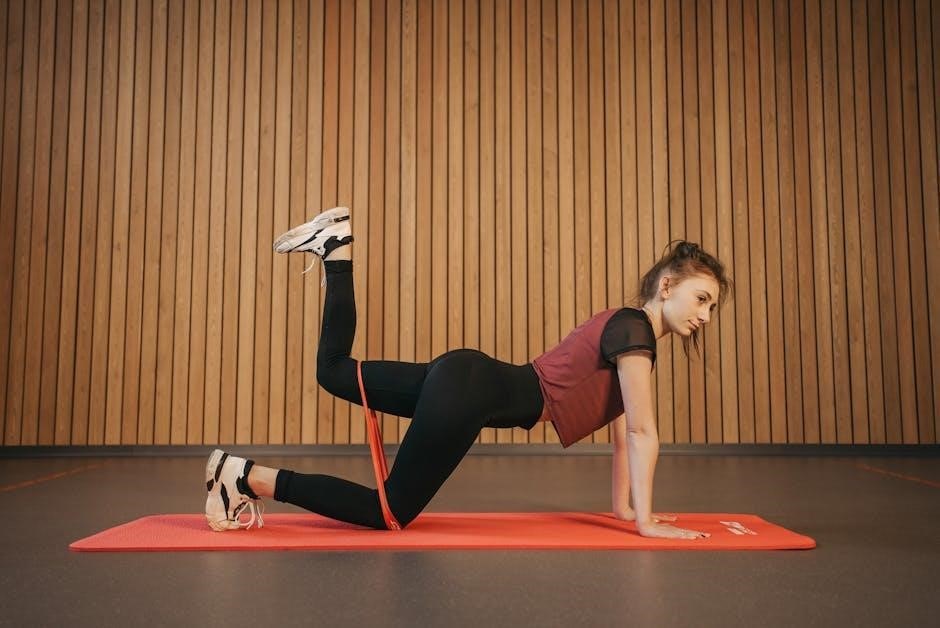
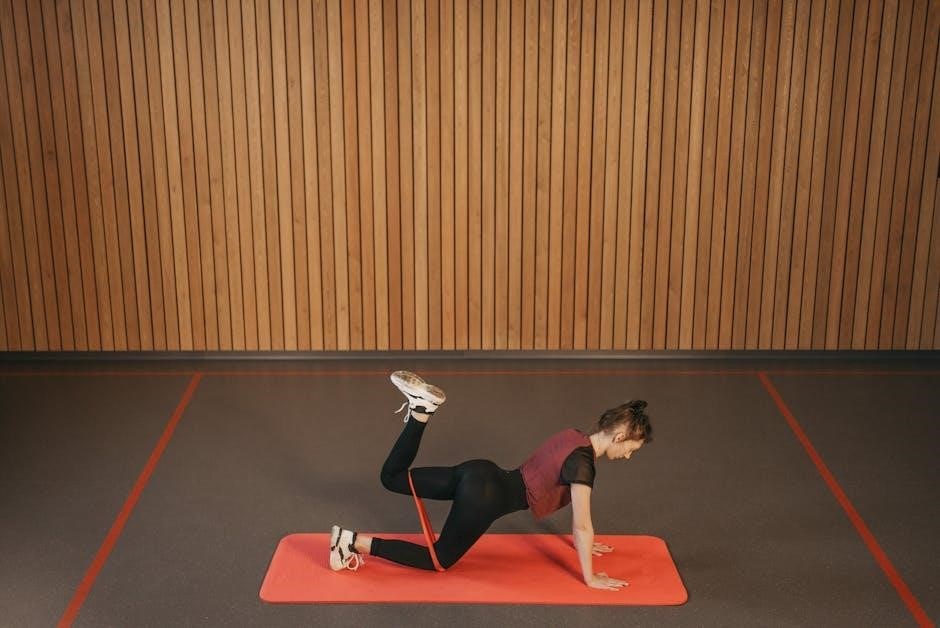
Clamshells, using a resistance band around your thighs, are another excellent option. Standing hip abduction with a resistance band also targets these muscles. Perform these exercises 2-3 times per week, aiming for 3 sets of 15-20 repetitions. Focus on slow, controlled movements to maximize muscle engagement and prevent compensatory motions. Consistent hip abductor strengthening supports proper alignment and reduces IT band irritation.
Core Strengthening Exercises

A strong core provides a stable base for movement, influencing lower body mechanics and reducing stress on the IT band. Weak core muscles can lead to compensatory movements and increased strain. Effective core exercises include planks, holding a straight line from head to heels, engaging abdominal and back muscles. Bird-dogs, alternating arm and leg extensions while maintaining a neutral spine, improve stability.
Dead bugs, lying on your back and lowering opposite arm and leg, also enhance core control. Incorporate these exercises 2-3 times weekly, performing 3 sets of 10-15 repetitions. Prioritize proper form over quantity, focusing on controlled movements and maintaining a braced core throughout each exercise. A robust core supports efficient movement patterns and minimizes IT band discomfort.

Preventing IT Band Syndrome
Consistent warm-ups, proper running form, and well-fitting footwear are crucial preventative measures, alongside regular stretching and strengthening exercises to maintain optimal biomechanics.
Proper Warm-up and Cool-down
A dynamic warm-up prepares your muscles for activity, increasing blood flow and flexibility, which is vital before running or cycling. Include leg swings, high knees, and butt kicks to activate key muscle groups. Prioritize movements that mimic the demands of your chosen activity.
Conversely, a cool-down helps gradually reduce your heart rate and prevents muscle soreness. Static stretches, holding each stretch for 20-30 seconds, are beneficial post-exercise. Focus on stretching the quadriceps, hamstrings, and glutes, as these muscles directly influence IT band function.
Neglecting either warm-up or cool-down routines can increase the risk of IT band irritation. Consistent implementation of these practices supports muscle health and reduces the likelihood of developing IT band syndrome, promoting long-term athletic performance and injury prevention.
Running Form Analysis
Efficient running form minimizes stress on the IT band and surrounding structures. Overstriding, where the foot lands far ahead of the body, is a common culprit contributing to IT band syndrome. A shorter stride length and increased cadence (steps per minute) can help correct this.
Consider your pelvic drop; excessive dropping can internally rotate the hip, increasing IT band tension. Strengthening hip abductors and gluteal muscles helps stabilize the pelvis. A professional gait analysis can identify biomechanical flaws you might not notice yourself.
Focus on maintaining a neutral spine and avoiding excessive twisting motions. Proper form, combined with appropriate footwear and consistent stretching, is crucial for preventing IT band issues and optimizing running performance. Addressing these elements proactively can significantly reduce injury risk.
Appropriate Footwear
Selecting the right running shoes is paramount in preventing IT band syndrome. Shoes that provide adequate cushioning and support can significantly reduce stress on the lower limbs. Consider your foot type – pronation (inward rolling) or supination (outward rolling) – and choose shoes designed to correct or accommodate these movements.
Worn-out shoes lose their cushioning and support, increasing the risk of injury. Replace your running shoes every 300-500 miles, or sooner if you notice signs of wear. A running specialty store can perform a gait analysis to recommend the best shoe for your biomechanics.
Avoid shoes that are too tight or too loose, as they can cause friction and discomfort. Proper fit is essential for optimal performance and injury prevention. Investing in quality footwear is a crucial step in protecting your IT band and enjoying pain-free running.
When to Seek Professional Help
While many cases of IT band syndrome respond well to self-treatment with exercises and stretches, knowing when to consult a healthcare professional is crucial. If your pain is severe and doesn’t improve after several weeks of consistent home care, seek medical attention.
Don’t hesitate to see a doctor or physical therapist if the pain interferes with daily activities, such as walking or climbing stairs. A professional can accurately diagnose the issue, ruling out other potential causes of knee pain. They can also develop a personalized treatment plan tailored to your specific needs.
Ignoring persistent pain could lead to chronic issues. Early intervention often results in a faster recovery and prevents the condition from worsening. A qualified professional can guide you towards a full return to activity.