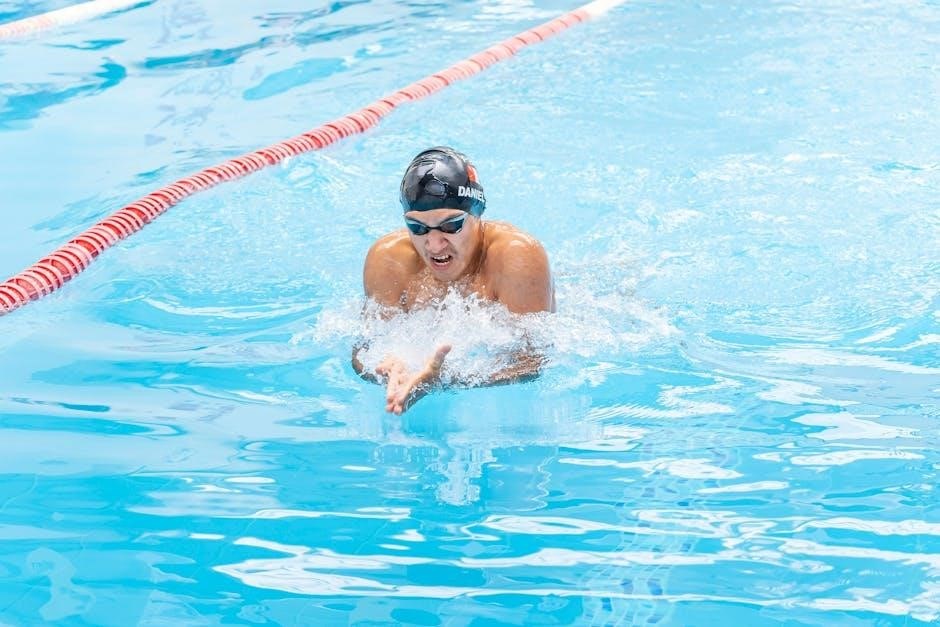
A well-structured swimming training program for beginners is essential to build endurance, improve technique, and enhance overall fitness, providing a guided progressive learning approach․
Why a Structured Program is Crucial
A structured swimming training program is paramount for beginners, preventing plateaus and minimizing injury risk․ Enthusiasm shouldn’t overshadow a correctly designed guide; allowing sufficient rest and recovery between sessions is vital․
Progress varies individually, and the body needs time to adapt to new demands․ A program ensures gradual progression, building a solid foundation of technique and endurance․ Without structure, individuals may develop incorrect form, hindering improvement and potentially leading to strain․
Lauterstein and Monk’s 8-week engine exemplifies a designed approach for adult beginners seeking fitness․ Repetition ranges, like 15-18 for resistance training, demonstrate a methodical build-up․ A guided program fosters confidence and maximizes results, transforming initial efforts into sustained progress․
Benefits of Swimming for Beginners
Swimming offers a full-body workout with minimal impact, ideal for beginners․ It enhances cardiovascular fitness, builds muscular strength and endurance, and improves flexibility․ Unlike high-impact exercises, it’s gentle on joints, making it accessible to a wider range of individuals․
Beyond physical health, swimming reduces stress and improves mental wellbeing․ The rhythmic nature of strokes can be meditative, promoting relaxation․ Mastering new skills boosts confidence and self-esteem․ A well-executed training program amplifies these benefits․
Experienced coaches, like those who’ve guided Master’s swim squads to national titles, understand how to unlock swimming’s potential․ A structured approach, even for those new to training, ensures safe and effective progress, leading to open water success and overall fitness gains․
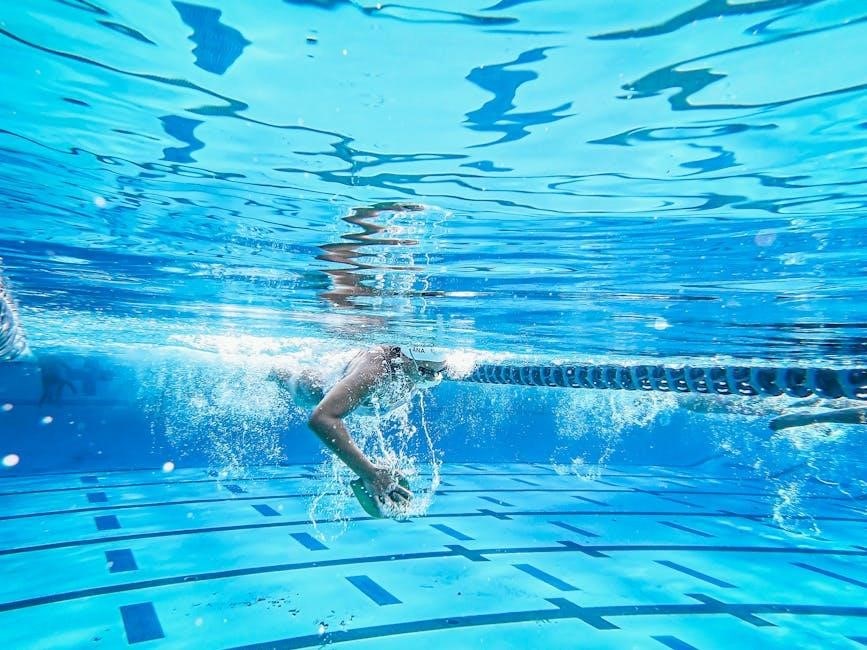
Phase 1: Water Acclimation & Basic Skills (Weeks 1-2)
This initial phase focuses on building comfort and confidence in the water, mastering essential skills like breathing, floating, and basic kicking techniques with a kickboard․
Getting Comfortable in the Water
Initially, simply entering and moving around in the water is key․ Walk in the shallow end, getting used to the sensation of buoyancy and water pressure․ Practice blowing bubbles with your face submerged, gradually increasing the duration․ This helps develop breath control and reduces anxiety about putting your face in the water․
Next, try gently bobbing up and down, exhaling underwater and inhaling above the surface․ Focus on relaxing your body and letting the water support you․ Avoid tension, as it will make it harder to float․ Spend time simply floating on your stomach and back, supported by the water; Remember, everyone progresses at a different rate; don’t rush the process․ Allow your body time to adapt to the new demands․ Enthusiasm is great, but a correctly structured approach with sufficient rest is vital․
Consistent practice, even for short periods, will build confidence and reduce fear․ The goal is to feel relaxed and at ease in the aquatic environment before progressing to more complex skills․
Breathing Techniques – Essential for Beginners
Mastering rhythmic breathing is fundamental to swimming․ Begin by practicing exhaling fully underwater through your nose and mouth․ This prevents carbon dioxide buildup and prepares you for a quick, efficient inhale․ Then, rotate your head to the side to inhale quickly and deeply above the water, returning your face to a streamlined position to exhale․
Focus on coordinating your breathing with your arm movements․ A common drill is to exhale continuously while one arm extends forward, then inhale as that arm recovers․ This synchronization is crucial for maintaining a smooth, efficient stroke․ Remember, the key is to build gradually; your body needs time to adapt․
Avoid holding your breath, as this creates tension and hinders progress․ Consistent practice of these techniques will build confidence and improve your overall swimming efficiency․ Allow sufficient rest between sessions to facilitate recovery and adaptation․
Floating and Body Position
Achieving a streamlined body position is vital for efficient swimming․ Start by practicing floating on your stomach and back, focusing on relaxing your body and extending your arms and legs․ A horizontal position minimizes drag and allows for easier propulsion․ Engage your core muscles to maintain stability and prevent sinking․
Experiment with slight adjustments to your head and body angle to find the most comfortable and buoyant position․ Remember, everyone floats differently, so it’s important to discover what works best for you․ A common mistake is tensing up; consciously relax your muscles to promote natural buoyancy․
Progress to incorporating gentle kicking and arm movements while maintaining the streamlined position․ This will help you develop a feel for how your body moves through the water and build a foundation for more advanced strokes․ Gradual progression is key to success․
Kicking Drills with a Kickboard
Utilizing a kickboard isolates your leg muscles, allowing you to focus on developing a strong and efficient kick․ Hold the kickboard with extended arms, keeping your head down and body streamlined․ Practice flutter kicks, ensuring a small, rapid motion originating from the hips, not the knees․
Begin with short distances (25m/50m) and gradually increase the length as your endurance improves․ Focus on maintaining a consistent kick tempo and a horizontal body position․ Avoid bending your knees excessively or lifting your head too high, as this creates drag․
Incorporate variations like side kicking (holding the kickboard to one side) to engage different leg muscles and improve body rotation․ Remember to breathe regularly, turning your head to the side with each breath․ Consistent kickboard drills build leg strength and improve overall swimming technique․
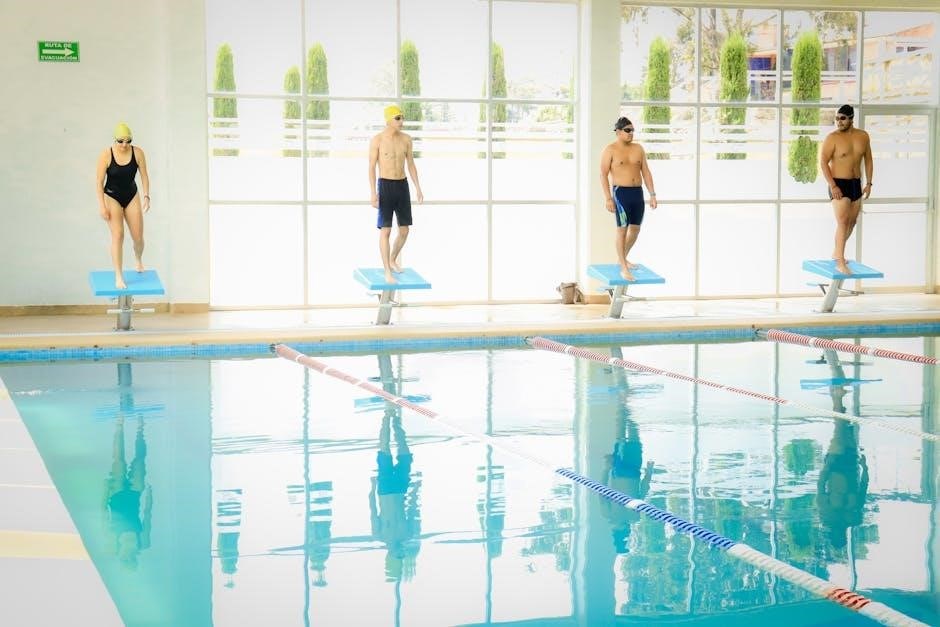
Phase 2: Stroke Development – Freestyle Focus (Weeks 3-4)
This phase concentrates on freestyle, breaking down arm action, breathing, and body rotation, culminating in short distance sets to build foundational swimming skills․
Freestyle Arm Action – Breakdown and Drills
Effective freestyle relies on a streamlined arm action, initiating from the shoulder and extending forward with a high elbow recovery․ Imagine reaching over a barrel; this promotes proper form․ Begin with drills focusing on single-arm freestyle, utilizing a kickboard for stability․ Perform six repetitions with each arm, concentrating on a full extension and powerful pull-through․
Focus on maintaining a relaxed hand and forearm during the recovery phase, minimizing drag․ Another beneficial drill involves “catch-up” freestyle, where one arm remains extended forward until the other completes its pull․ This emphasizes a continuous, flowing motion․ Remember to keep your body aligned and core engaged throughout each drill․
Consistency is key; dedicate time in each session to these drills to build muscle memory and refine your technique․ Gradually increase the distance of each drill set as your proficiency improves․ Proper arm action is the cornerstone of efficient freestyle swimming․
Combining Arm Action and Breathing
Integrating breathing with your freestyle arm action is crucial for a smooth and efficient stroke․ Coordinate your breath with the arm recovery on one side – rotate your head to inhale as your arm extends forward, then exhale fully into the water․ Avoid lifting your head excessively, as this disrupts body position and creates drag․
Drills like “side breathing” focus specifically on this coordination․ Swim freestyle, deliberately breathing to only one side for a set distance (e․g․, 25 meters), then switch sides․ This builds comfort and control․ Another drill involves pausing briefly after each breath to ensure complete exhalation․
Initially, breathing may feel awkward, but consistent practice will make it more natural․ Focus on a rhythmic pattern – inhale quickly and exhale slowly․ Maintaining a relaxed body and proper technique will minimize fatigue and improve your ability to breathe effectively while swimming freestyle․
Freestyle Kick and Body Rotation
A strong, consistent kick provides propulsion and helps maintain a streamlined body position in freestyle․ The kick should originate from the hips, not the knees, with a relatively narrow amplitude․ Keep your ankles relaxed and point your toes․ A six-beat kick (six kicks per arm cycle) is common for beginners, but can evolve․
Body rotation is integral to efficient freestyle․ As you rotate, it extends your reach with each stroke, engages larger muscle groups, and facilitates breathing․ Rotate from your core, keeping your head aligned with your spine․ Avoid excessive rotation, which can create drag․
Drills focusing on body rotation, like “single-arm freestyle with rotation,” help develop this skill․ Practice rotating your body with each stroke, feeling the stretch and engagement․ Combining a streamlined kick with controlled body rotation will significantly improve your freestyle efficiency and speed․
Short Freestyle Distance Sets (25m/50m)
Begin introducing short freestyle distance sets to build endurance and reinforce proper technique․ Start with sets of 25 meters, focusing on maintaining form throughout each length․ Rest adequately between repetitions – 20-30 seconds is a good starting point․ Gradually increase the number of repetitions as fitness improves․
Example set: 4 x 25m freestyle with 20 seconds rest․ Once comfortable, progress to 50-meter sets․ A sample 50m set could be 2 x 50m freestyle with 30 seconds rest․ Prioritize technique over speed; a slower, technically sound swim is more beneficial than a fast, sloppy one․
Remember to monitor your breathing and maintain a consistent stroke rate․ These short sets are designed to build a foundation of endurance without overwhelming beginners․ As you progress, you can reduce rest intervals and increase the number of repetitions․
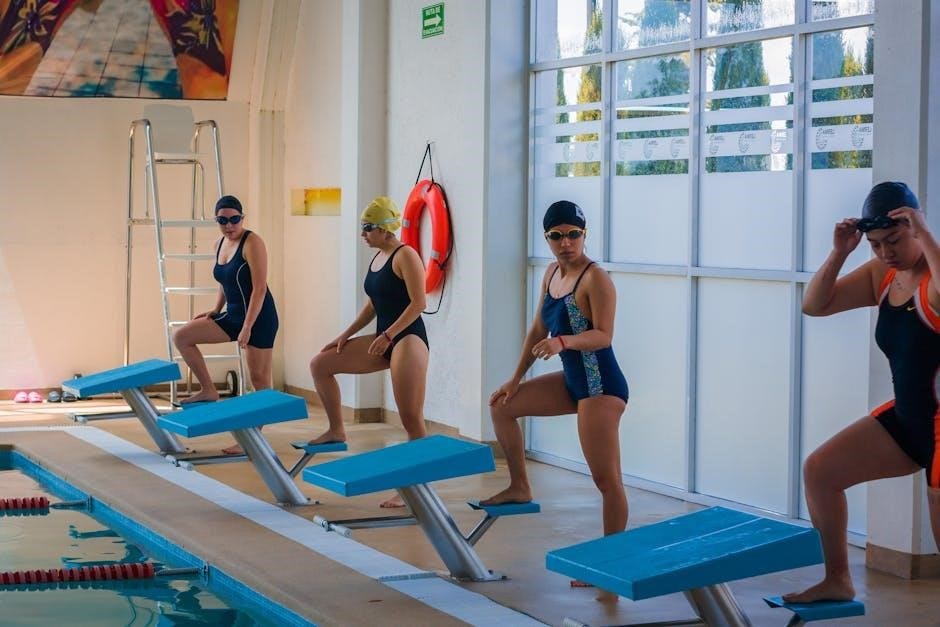
Phase 3: Building Endurance & Introducing Other Strokes (Weeks 5-6)
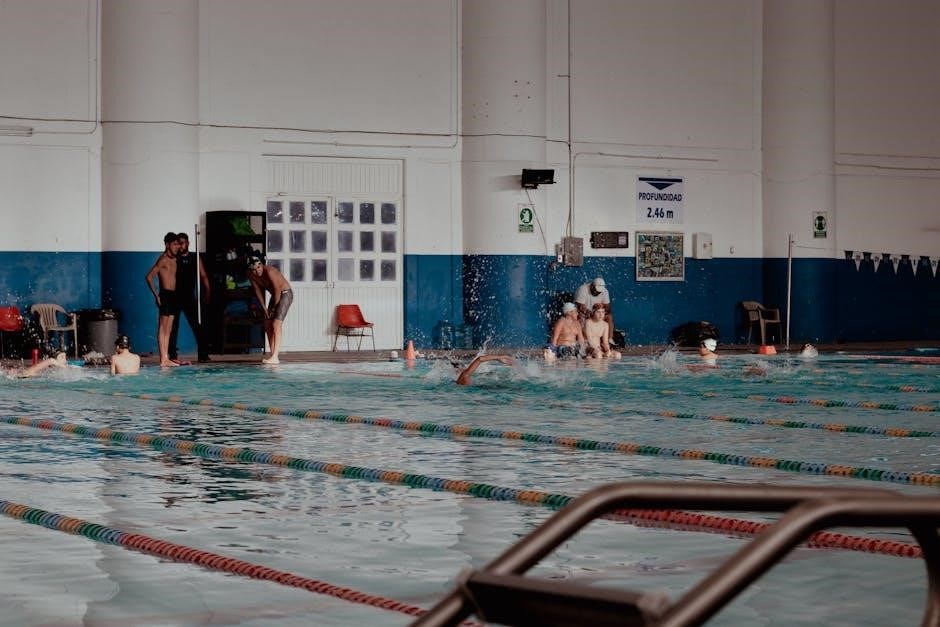
This phase focuses on gradually increasing freestyle distance while introducing backstroke basics, combining both strokes in sets for a well-rounded beginner program․
Increasing Freestyle Distance Gradually
As beginners progress, incrementally increasing freestyle distance is paramount for building endurance․ Avoid sudden jumps in yardage; instead, focus on adding 25 or 50 meters to sets each week․ A sample progression might involve starting with six 25-meter repeats, then moving to four 50-meter repeats, and eventually attempting two 100-meter swims․
Prioritize maintaining good technique over speed during these distance increases․ Encourage swimmers to focus on efficient arm strokes, consistent breathing, and a streamlined body position․ Rest intervals are crucial – allow sufficient recovery between repeats to prevent fatigue and maintain form․ Monitoring heart rate can also be beneficial, ensuring swimmers remain within an aerobic training zone․
Remember that individual progress varies․ Some beginners may adapt quickly, while others require more time․ Adjust the program accordingly, emphasizing consistency and gradual improvement․ Celebrate small victories and encourage a positive attitude towards challenging oneself․
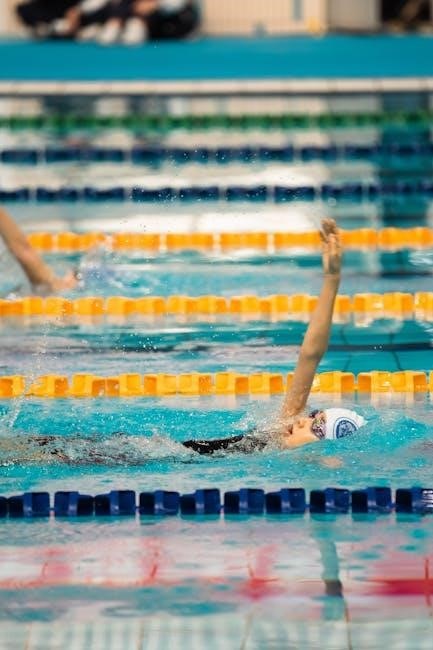
Backstroke presents a unique challenge for beginners, requiring a different body position and coordination than freestyle․ Start by emphasizing a streamlined body position, lying flat on the back with ears submerged․ The hips should be high and the core engaged to prevent sinking․ Arm movements initiate with a straight arm reaching overhead, followed by a pull through the water, finishing at the thigh․
Breathing is generally easier in backstroke, as the face remains out of the water․ However, encourage rhythmic breathing, exhaling underwater during the arm recovery and inhaling during the arm pull․ Kicking should be small and continuous, originating from the hips, not the knees․ Focus on maintaining a consistent tempo and avoiding excessive splashing․
Drills like “one-arm backstroke” and “kickboard drills” help isolate and refine specific components of the stroke․ Prioritize body position and rotation before focusing on speed or power․
Backstroke Drills for Beginners
Several drills effectively build backstroke proficiency․ “Superman Glide” encourages a streamlined body position, focusing on core engagement and hip elevation․ “One-Arm Backstroke” isolates arm technique, promoting proper pull-through and recovery․ Alternate arms for balanced development․
Kickboard drills, performed on the back, emphasize leg drive and body rotation․ Maintain a tight core and small, rapid kicks․ “Fingertip Drag” drills refine arm recovery, ensuring a high elbow and relaxed hand․ Drag fingertips lightly across the water’s surface during recovery․
Rotation drills involve consciously rotating the body from side to side, enhancing reach and power․ Focus on initiating rotation from the core, not just the shoulders․ These drills, performed with consistent feedback, build a solid foundation for efficient backstroke technique․
Combining Freestyle and Backstroke in Sets
Integrating freestyle and backstroke into sets builds overall endurance and versatility․ Begin with short intervals – for example, 25 meters freestyle followed by 25 meters backstroke, repeating six to eight times․ Focus on smooth transitions between strokes, minimizing rest․
Progress to longer intervals, such as 50 meters freestyle/50 meters backstroke, or even 100-meter combinations․ Introduce varied sets like 4 x 50m (25m freestyle, 25m backstroke) with a short rest, then 4 x 25m (alternating strokes each length)․
Pyramid sets – increasing and decreasing distances – are also effective․ For instance, 25m/50m/75m/50m/25m freestyle/backstroke․ These combinations enhance cardiovascular fitness and stroke technique, preparing beginners for more complex training routines․
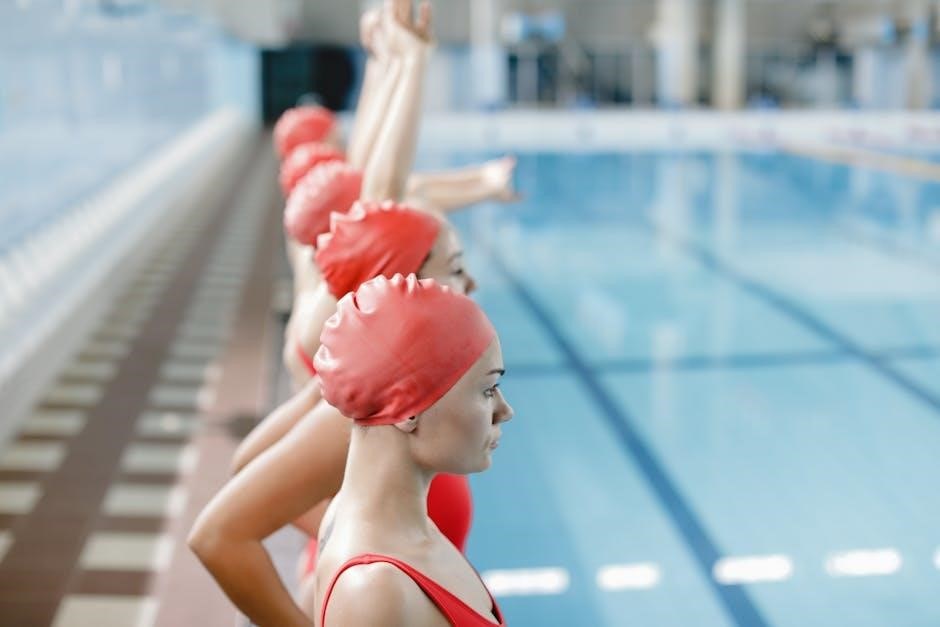
Phase 4: Refining Technique & Increasing Intensity (Weeks 7-8)
This phase focuses on correcting common errors in freestyle and backstroke, while introducing interval training to elevate intensity and build speed effectively․
Freestyle Technique Refinement – Common Errors
During weeks seven and eight, focus shifts to identifying and rectifying frequent freestyle mistakes․ A common issue is dropping the elbow during the pull-through phase, reducing propulsion․ Drills emphasizing a high elbow catch are crucial․
Another prevalent error is crossing the midline with the hands, creating drag and inefficient movement․ Consciously maintaining a straight-line pull is vital․ Beginners often lift their heads too high to breathe, causing the hips to sink and increasing resistance․ Practice bilateral breathing to promote a streamlined body position․
Insufficient body rotation also hinders efficiency․ Encourage swimmers to rotate from their core, extending the reach and maximizing the pull․ Finally, a weak kick can disrupt balance and slow progress․ Focus on a consistent, flutter kick originating from the hips, not the knees․ Consistent feedback and targeted drills will yield significant improvements․
Backstroke Technique Refinement
As beginners progress, refining backstroke technique is paramount․ A frequent error is a lack of body roll, leading to a flat, inefficient position․ Drills focusing on initiating rotation from the hips are essential, promoting a more powerful pull․
Many struggle with a consistent arm recovery; arms should enter the water pinky-first, extending fully overhead․ Emphasize a smooth, circular motion, avoiding a “windmill” style․ A common mistake is dropping the elbow during the pull-through, reducing leverage․ High-elbow catch drills are beneficial․
Head position is also critical – maintain a neutral gaze, avoiding looking at the feet, which causes the hips to sink․ A strong, continuous kick originating from the hips provides propulsion and maintains body position․ Consistent feedback and focused drills will enhance efficiency and speed․
The breaststroke kick, often called the “frog kick,” requires coordination and flexibility․ Beginners should start by practicing the kick on their front with a kickboard, focusing on the whip-like motion․ The legs should draw up towards the body, knees bent and feet flexed, then powerfully sweep outwards and back together․
A common error is performing the kick with straight legs, reducing power and increasing strain․ Emphasize keeping the knees relatively narrow during the recovery phase․ Ankle flexibility is crucial for effective propulsion; stretching exercises can improve this․
Drills involving kicking on the back can help isolate the leg movement and improve body position․ Focus on a streamlined body position throughout the kick, minimizing drag․ Gradual progression from slow, controlled kicks to faster, more powerful kicks is key to building proficiency;
Interval Training for Beginners
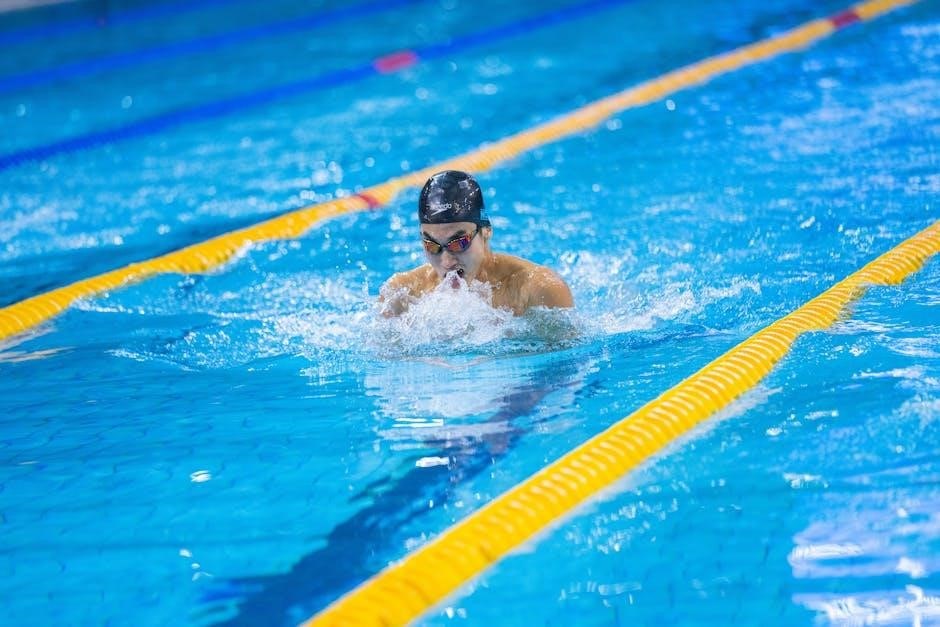
Interval training introduces periods of high-intensity swimming followed by recovery periods, boosting endurance and speed․ For beginners, start with short, manageable intervals like 25 or 50 meters, swimming at a comfortably challenging pace․ Recovery can be active – easy swimming – or passive, with complete rest․
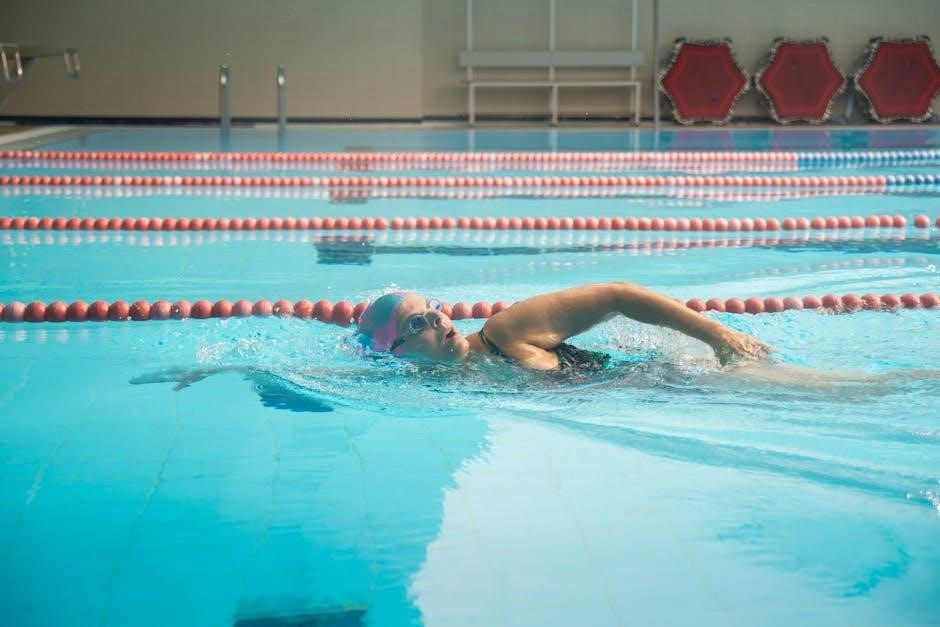
A sample beginner interval set might be six repetitions of 25 meters freestyle with 20 seconds rest between each․ Gradually increase the distance, decrease the rest, or increase the swim speed as fitness improves․ Listen to your body and avoid pushing too hard, too soon․
Focus on maintaining good technique throughout the intervals, even when fatigued․ Interval training isn’t about sprinting every length; it’s about consistent effort with controlled recovery․ This method builds cardiovascular fitness and teaches the body to recover efficiently․
Program Considerations
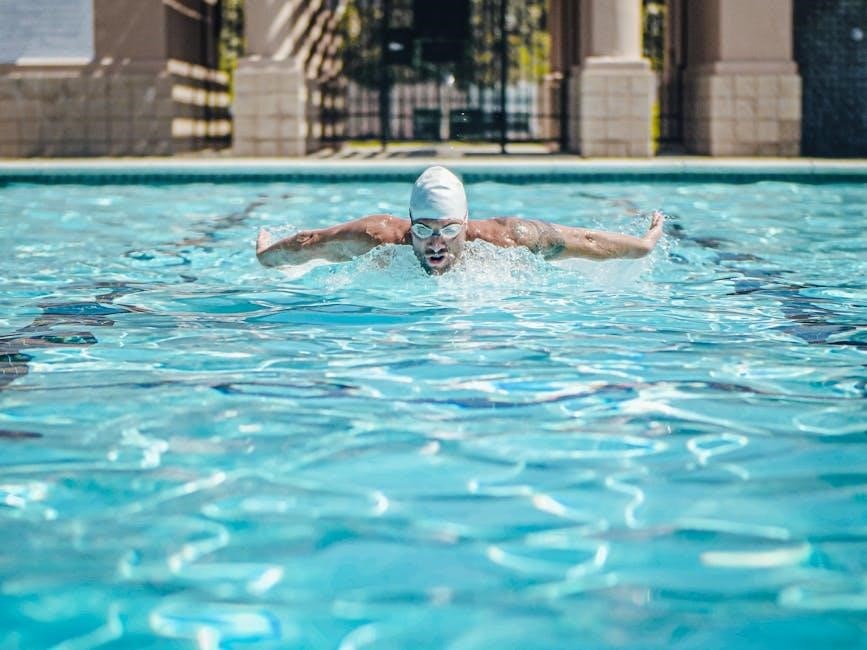
Always allow sufficient rest and recovery between sessions, as enthusiasm shouldn’t override a correctly structured training guide; adapt to your body’s demands․
Warm-up and Cool-down Routines
Prior to each swimming session, a dynamic warm-up is crucial․ This should include arm circles, leg swings, and torso twists, preparing muscles for activity․ Begin with 5-10 minutes of light cardio, like easy swimming or kicking, gradually increasing intensity․
A proper warm-up enhances performance and reduces injury risk․ Following your main set, a cool-down is equally important․ This involves 5-10 minutes of slow, relaxed swimming, focusing on technique and controlled breathing․
Include gentle stretching, targeting major muscle groups used in swimming – shoulders, back, chest, and legs․ Holding each stretch for 20-30 seconds promotes flexibility and aids recovery․ Consistent warm-up and cool-down routines are fundamental components of a safe and effective beginner swimming program, ensuring optimal results and preventing strain․
Rest and Recovery – Importance and Strategies
Adequate rest and recovery are paramount for beginners, allowing the body to adapt to the demands of swimming training․ Overtraining can hinder progress and increase injury risk․ Schedule rest days into your program – at least one to two per week – to allow muscles to repair and rebuild․
Prioritize sleep, aiming for 7-9 hours of quality sleep each night․ This is when the body performs most of its recovery processes․ Nutrition plays a vital role; consume a balanced diet rich in protein, carbohydrates, and healthy fats to fuel recovery․
Consider active recovery techniques like light stretching or foam rolling to improve blood flow and reduce muscle soreness․ Listen to your body and don’t push through pain․ Allowing sufficient rest is not a sign of weakness, but a strategic component of a successful training program․
Nutrition for Swimmers
Proper nutrition is crucial for swimmers, fueling workouts and aiding recovery․ Carbohydrates are the primary energy source, so prioritize complex carbs like whole grains, fruits, and vegetables․ These provide sustained energy for training sessions․ Protein is essential for muscle repair and growth; include lean protein sources like fish, chicken, or beans in your diet․
Hydration is key! Drink water consistently throughout the day, especially before, during, and after swimming․ Dehydration can significantly impact performance․ Healthy fats are also important for overall health and hormone production, so incorporate sources like avocados and nuts․
Avoid processed foods, sugary drinks, and excessive caffeine․ A balanced diet tailored to your training intensity will optimize your performance and recovery, supporting your swimming journey․
Monitoring Progress and Adjusting the Program
Regularly tracking your progress is vital for a successful swimming program․ Keep a log of your workouts, noting distances, times, and how you felt during each session․ Pay attention to improvements in technique and endurance․ Don’t solely focus on speed; consistent effort and proper form are equally important․
If you find a particular week too challenging, don’t hesitate to repeat it before moving on․ Conversely, if you’re consistently exceeding expectations, consider slightly increasing the intensity or volume․ Listen to your body and adjust the program based on your individual needs and recovery․
Remember everyone progresses at a different rate․ Celebrate small victories and stay motivated․ Seeking guidance from a coach can provide personalized feedback and ensure you’re on the right track․