
Corvette Manual Transaxle: A Comprehensive Overview
Corvette’s transaxles have evolved significantly, facing issues like valve spring failures and CSPs (N232427051) impacting C8 models, alongside emerging faults in the E-Ray.
Corvette manual transaxles represent a fascinating intersection of performance engineering and driver engagement, evolving alongside the iconic sports car itself. From the early, robust designs to the sophisticated seven and eight-speed systems of modern Corvettes, these transmissions have always been crucial to the driving experience. The enduring appeal of a manual transmission, even amidst the rise of advanced automatics and dual-clutch systems, stems from the direct connection it provides between driver and machine.

However, this pursuit of performance hasn’t been without its challenges. Recent years have seen General Motors issue Customer Satisfaction Programs (CSPs), like N232427051 for the C8, addressing transmission concerns. Valve spring issues and reports of misfire codes, even in relatively new models like the 2023 Stingray, highlight the complexities involved in delivering a reliable and exhilarating manual experience. Understanding the nuances of these transaxles – their design, common failure points, and maintenance requirements – is essential for any Corvette enthusiast.
Historical Evolution of Corvette Transmissions
The Corvette’s transmission history mirrors its performance aspirations. Early models featured traditional manual transmissions, gradually evolving with advancements in gear ratios and synchronization. As power outputs increased, so did the demands on the transmission, leading to stronger components and more sophisticated designs. The shift towards rear-mounted transaxles, beginning with the C5, was a pivotal moment, improving weight distribution and handling characteristics.

Subsequent generations, like the C7, introduced the seven-speed manual, offering a more refined and engaging driving experience. However, even these advancements weren’t immune to issues, necessitating ongoing refinement and, in some cases, Customer Satisfaction Programs. The arrival of the C8 marked a significant departure with the widespread adoption of the eight-speed dual-clutch transmission, often compared to traditional manuals, yet representing a fundamentally different approach to gear changes and driver control. This evolution continues, with the E-Ray presenting new challenges and potential fault areas.
The 7-Speed Manual Transaxle (C7 Generation)
The C7 Corvette’s seven-speed manual transaxle represented a leap forward in driver engagement. Designed to handle the increased power of the LT1 and LT4 engines, it featured a robust construction and precise shift linkage. This transaxle aimed to deliver a more connected feel, appealing to enthusiasts who preferred the control of a manual gearbox. However, despite its improvements, the C7’s manual wasn’t without its drawbacks.
Common issues included concerns regarding shift quality, particularly at higher RPMs, and occasional reports of internal component wear. While generally reliable, preventative maintenance and careful driving habits were crucial for longevity. The transaxle’s complexity also meant that repairs could be costly, requiring specialized knowledge and tools. It served as a bridge between traditional manuals and the advanced dual-clutch technology that would define the C8 generation.
Design and Components of the 7-Speed
The C7 Corvette’s 7-speed manual transaxle boasts a sophisticated design, incorporating a lightweight aluminum alloy case for reduced weight and improved heat dissipation. Internally, it features helical gears for quieter operation and enhanced durability. A dual-mass flywheel minimizes drivetrain vibrations, contributing to a smoother driving experience. The shift linkage utilizes a precise mechanism to ensure accurate gear engagement.
Key components include robust synchronizers, designed to match engine and transmission speeds for seamless shifts, and a limited-slip differential to optimize traction. The transaxle’s overall layout integrates the transmission and differential into a single unit, contributing to a more compact and efficient powertrain. Careful attention was paid to lubrication pathways to ensure adequate cooling and protection of internal parts, maximizing reliability and performance.
Common Issues and Failure Points (C7)
Despite its robust design, the C7 Corvette’s 7-speed manual transaxle isn’t immune to issues. A frequently reported problem involves synchronizer wear, particularly in 1st and 2nd gear, leading to grinding during shifts. Clutch failures, often stemming from aggressive driving or track use, are also common, manifesting as slippage or difficulty engaging gears.
The differential can experience wear, resulting in unusual noises or limited-slip functionality degradation. Some owners have reported issues with the shift linkage, causing imprecise or notchy shifts. Internal bearing failures, though less frequent, can occur over time, leading to increased noise and potential damage. Regular fluid checks and timely maintenance are crucial to mitigate these risks and prolong the transaxle’s lifespan.
The 8-Speed Dual-Clutch Transmission (C8 Generation) ⏤ Often Compared to Manuals
The C8 Corvette’s 8-speed dual-clutch transmission (DCT) represents a significant departure from traditional manual transaxles, yet it’s frequently discussed alongside them due to its performance focus. DCT operation relies on two separate clutches for odd and even gears, enabling incredibly fast and smooth shifts. This contributes to quicker acceleration times compared to a manual, though some enthusiasts miss the direct engagement of a traditional stick shift.
The DCT offers multiple driving modes, tailoring shift points and responsiveness to suit various conditions. However, it has faced scrutiny regarding early faults and CSPs, like N232427051, addressing transmission concerns. Despite these issues, the DCT delivers a compelling blend of speed and sophistication.
DCT Operation and Driver Engagement
The dual-clutch transmission (DCT) in the C8 Corvette operates by utilizing two separate clutches – one for odd-numbered gears and another for even-numbered gears. This pre-selection allows for near-instantaneous shifts, as the next gear is already engaged and ready to go. Paddle shifters provide the driver with manual control, mimicking the feel of a traditional gearbox, though lacking the direct mechanical linkage.
Driver engagement is a key consideration; while the DCT offers impressive speed, some purists argue it doesn’t provide the same level of connection as a manual. The DCT’s programming prioritizes efficiency and performance, sometimes at the expense of raw driver feel. Nevertheless, the C8’s DCT delivers a uniquely engaging experience, blending automation with driver control.
DCT vs. Traditional Manual Transaxles: A Comparison
Traditional manual transaxles offer a direct mechanical link between the driver and the drivetrain, providing a tactile and engaging experience. Skillful drivers can precisely control gear selection, optimizing performance and enjoying a heightened sense of connection. However, they demand more driver effort and can be slower in outright acceleration compared to modern automatics.
The C8 Corvette’s DCT, conversely, prioritizes speed and efficiency. Its lightning-fast shifts consistently outperform manual gear changes, resulting in quicker lap times. While it simulates a manual experience with paddle shifters, it lacks the same physical engagement. Despite being technically faster, some enthusiasts still prefer the immersive feel and control offered by a traditional manual transmission, valuing engagement over pure speed.
Customer Satisfaction Programs (CSPs) and Technical Service Bulletins (TSBs)
General Motors frequently addresses emerging issues in the Corvette through Customer Satisfaction Programs (CSPs) and Technical Service Bulletins (TSBs). These initiatives aim to rectify problems and enhance owner satisfaction, often without cost to the vehicle owner. CSP N232427051 specifically targets transmission concerns within the C8 Corvette generation, indicating a recognized pattern of failures requiring attention.
TSBs, like the one issued in September 2020 regarding broken valve springs, highlight specific component weaknesses. These bulletins provide detailed repair procedures for technicians. The consistent release of CSPs and TSBs demonstrates GM’s commitment to proactively resolving issues and maintaining the Corvette’s reputation for performance and reliability, even amidst emerging faults like those seen in the E-Ray.
N232427051 CSP: Addressing Transmission Concerns (C8)
Customer Satisfaction Program N232427051 was released by General Motors to address specific transmission issues affecting select C8 Corvette models. While details regarding the exact nature of the problem remain somewhat guarded, the CSP’s existence confirms a recognized pattern of transmission-related concerns within this generation. This proactive measure indicates a potential for premature wear, component failure, or operational inconsistencies impacting the driving experience.
Corvette owners are encouraged to verify if their vehicle is eligible for this CSP through a GM dealership or the official GM owner center website. The program likely involves inspection, repair, or component replacement, performed at no cost to the owner, demonstrating GM’s dedication to resolving identified issues and upholding the Corvette’s quality standards.

Valve Spring Issues and Related TSBs (C8)
Prior to the N232427051 CSP, General Motors issued a Technical Service Bulletin (TSB) in September 2020, detailing a problem with broken valve springs within the C8 Corvette’s transmission. This TSB highlighted a potential failure mode impacting transmission performance and reliability. Broken valve springs can lead to erratic shifting, reduced power delivery, and ultimately, complete transmission failure if left unaddressed.
The initial TSB served as an early indicator of potential transmission vulnerabilities in the C8. While the CSP addresses a potentially different issue, the prior valve spring problem underscores a pattern of transmission-related concerns requiring attention. Owners experiencing unusual shifting behavior or performance issues should consult a GM dealership for diagnosis and potential repair under warranty or TSB coverage.
Misfire Codes and Loss of Drive: A Case Study (2023 Stingray)
A concerning incident involving a 2023 Chevrolet Corvette Stingray, with only 17,000 miles, revealed a significant transmission issue. The vehicle initially presented with misfire codes, indicating an engine performance problem potentially linked to the drivetrain. Subsequently, the owner reported a distinct “pop” sound originating from the rear, immediately followed by a complete loss of drive. Despite the engine continuing to run normally, the Corvette became immobile.
This case study highlights a severe failure mode, suggesting a catastrophic internal component breakdown within the transaxle. The rapid progression from misfire codes to total drive loss underscores the urgency of addressing any transmission-related symptoms promptly. Further investigation is needed to determine the root cause, but this incident emphasizes potential reliability concerns within the C8 generation.
Early Faults in the Corvette E-Ray Transmission
Reports are emerging of significant issues plaguing the brand-new Corvette E-Ray, specifically concerning its transmission. A recent case details a vehicle experiencing major faults after a mere 1,200 miles of operation. The owner reports that problems are not isolated, but rather accumulating, suggesting a systemic issue rather than an individual anomaly.
These early failures raise serious questions about the E-Ray’s transmission reliability and quality control. Given the E-Ray’s hybrid powertrain and unique drivetrain configuration, the transmission faces increased complexity and stress. The rapid onset of problems indicates a potential design flaw or manufacturing defect requiring immediate attention from General Motors to prevent widespread customer dissatisfaction and potential recalls.
Transaxle Lubrication and Fluid Recommendations
Maintaining optimal transaxle performance hinges on proper lubrication with the correct fluid. Each Corvette generation demands a specific fluid type, and using the incorrect one can lead to premature wear, reduced efficiency, and even catastrophic failure. Identifying the correct fluid is paramount for longevity.
Owners must consult their owner’s manual or a trusted Corvette specialist to determine the recommended fluid for their specific model year and transaxle configuration. Regular fluid changes, adhering to the prescribed maintenance schedules, are crucial. Neglecting this vital service can compromise shifting smoothness, increase internal friction, and ultimately shorten the transaxle’s lifespan, resulting in costly repairs.
Identifying Correct Fluid Type for Each Generation
Determining the appropriate transaxle fluid varies significantly across Corvette generations. Early models often utilized GL-4 gear oil, while later iterations, particularly the C7 and C8, transitioned to more sophisticated fluids designed for enhanced performance and durability. The C7’s 7-speed manual transaxle requires a specific Dexron fluid formulation, differing from automatic transmission fluids.
The C8’s dual-clutch transmission (DCT), though not a traditional manual, also demands a unique fluid specification. Incorrect fluid can cause clutch slippage, poor shift quality, and internal damage. Always verify compatibility using the vehicle’s VIN or consult a Chevrolet dealership to ensure the correct fluid is used during service, safeguarding against potential issues and maintaining optimal operation.
Maintenance Schedules for Optimal Performance
Proactive maintenance is crucial for Corvette transaxle longevity. Regular fluid changes, typically every 30,000 miles for earlier generations and potentially more frequently for high-performance driving, are paramount. Inspecting the transaxle for leaks is also essential, addressing any issues promptly to prevent fluid loss and potential damage.
For C7 and C8 models, adhering to Chevrolet’s recommended service intervals, outlined in the owner’s manual, is vital. This includes checking shift linkage components and clutch operation. Ignoring these schedules can lead to premature wear, gear engagement problems, and costly repairs. Consistent upkeep ensures smooth shifting, reliable performance, and maximizes the lifespan of your Corvette’s transaxle.
Troubleshooting Common Transaxle Problems
Diagnosing Corvette transaxle issues requires a systematic approach. Gear engagement problems often manifest as grinding or difficulty selecting gears, potentially indicating worn synchronizers or shift linkage issues. A spongy or inconsistent clutch pedal feel can signal air in the hydraulic system or a failing master/slave cylinder. Misfire codes coupled with a loss of drive, as seen in a 2023 Stingray case, point to internal transmission failure.
Careful inspection for leaks, unusual noises, and fluid contamination is crucial. Utilizing a diagnostic scanner to retrieve error codes provides valuable clues. Addressing these issues promptly prevents further damage and ensures continued driving enjoyment. Professional diagnosis is recommended for complex problems.
Diagnosing Gear Engagement Issues
Gear engagement problems in a Corvette manual transaxle often present as difficulty shifting into specific gears, grinding noises during shifts, or gears popping out of engagement. Initial checks involve inspecting the shift linkage for proper adjustment and wear. Worn synchronizers are a common culprit, causing a delay or resistance when selecting a gear.
Internal damage to the gears themselves, though less frequent, should also be considered. Thoroughly examine the transmission fluid for metal shavings, indicating internal wear. A careful road test, noting precisely when the issue occurs, aids diagnosis. Professional inspection utilizing specialized tools is often necessary to pinpoint the root cause and recommend appropriate repairs.
Addressing Clutch Pedal Feel and Operation
Issues with clutch pedal feel – whether spongy, stiff, or inconsistent – signal potential problems within the hydraulic system or the clutch mechanism itself. Begin by inspecting the clutch master and slave cylinders for leaks or internal damage. Air in the hydraulic lines is a frequent cause of a spongy pedal, requiring a thorough bleeding procedure.
A stiff pedal often indicates a failing pressure plate or throw-out bearing. Inspect the clutch disc for wear or contamination. Proper adjustment of the clutch cable (if applicable) is crucial. If problems persist, a detailed examination of the clutch assembly is necessary to identify worn components and restore optimal pedal feel and smooth engagement.
Rebuilding a Corvette Manual Transaxle
A complete rebuild demands meticulous attention to detail and specialized tools. Begin by fully disassembling the transaxle, carefully documenting the location of each component. Thoroughly inspect all gears for wear, chipping, or damage, replacing as needed; Bearings should be checked for smoothness and replaced proactively. Synchronizers are critical for smooth shifting and often require replacement during a rebuild.
Pay close attention to the differential, inspecting gears and bearings. Clean all parts meticulously before reassembly, using appropriate lubricants during the process. Accurate torque specifications are vital for proper operation. Sourcing quality replacement parts is paramount for a reliable outcome, ensuring longevity and performance.

Sourcing Parts and Components
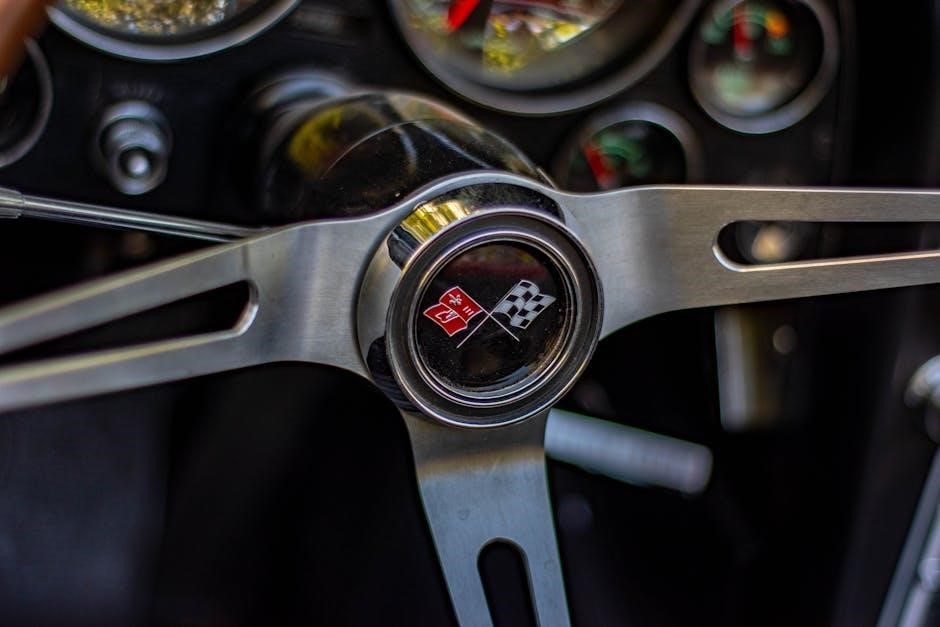
Finding reliable parts for Corvette manual transaxles requires careful consideration. General Motors dealerships remain a primary source for original equipment manufacturer (OEM) components, ensuring compatibility and quality. However, OEM parts can be expensive. Numerous aftermarket suppliers specialize in Corvette performance and restoration, offering a range of options at varying price points.
Online retailers and Corvette-specific forums are valuable resources for locating hard-to-find parts. When selecting aftermarket components, prioritize reputable brands known for durability and precision. Consider rebuilding kits that bundle essential parts, potentially saving cost and effort. Always verify part numbers and compatibility before purchasing, avoiding potential fitment issues.
Cost Analysis: Repair vs. Replacement
Determining whether to repair or replace a Corvette manual transaxle hinges on the extent of damage and associated costs. A minor issue, like a worn synchronizer, might warrant a repair, potentially costing between $800 and $2,000 including labor. However, significant internal damage, such as broken gears or a failing case, often pushes costs higher, nearing or exceeding the price of a replacement.
A rebuilt transaxle typically ranges from $3,000 to $6,000, while a new unit can easily surpass $8,000. Labor costs for removal and installation add another $1,000 to $2,500. Carefully weigh the long-term reliability of a repair versus the peace of mind offered by a replacement, factoring in the vehicle’s overall condition and intended use.
Performance Upgrades for Corvette Transaxles

Enhancing Corvette transaxle performance involves several avenues for modification. Aftermarket clutch options, ranging from performance street to full-race specifications, can significantly improve engagement and power handling, costing between $500 and $2,000 installed. Short shifters, priced around $200 to $500, reduce throw for quicker, more precise shifts.
Shift linkage modifications, including spherical bushings, further refine shift feel. Upgrading the transaxle cooling system, with an external oil cooler ($500-$1,500), is crucial for track use. Finally, exploring different differential options and gear ratios can optimize acceleration or top speed, with costs varying widely based on the chosen setup. These upgrades collectively elevate the driving experience.
Aftermarket Clutch Options
For Corvette manual transaxles, aftermarket clutch options cater to diverse performance needs. Street performance clutches, costing around $500-$800 installed, offer increased clamping force for moderate power gains and improved durability. Performance street/strip clutches ($800-$1,500) balance daily drivability with aggressive launches.

Full-race clutches, exceeding $1,500 installed, prioritize maximum power handling and consistent performance under extreme conditions. Considerations include disc material (organic, ceramic, or metallic), pressure plate design, and flywheel compatibility. Upgrading the clutch also necessitates evaluating the slave cylinder and master cylinder for optimal hydraulic performance, potentially adding another $200-$500 to the total cost.
Short Shifters and Shift Linkage Modifications
Enhancing the driving experience of a Corvette manual transaxle often involves short shifters and linkage modifications. Short shifters, ranging from $200 to $600 installed, reduce throw length, resulting in quicker, more precise shifts. These come in various designs, including billet aluminum and adjustable models, allowing customization of shift feel.
Shift linkage modifications, costing approximately $150-$400 for parts and installation, address slop and improve directness. Upgraded bushings replace worn components, minimizing play and enhancing feedback. Combining a short shifter with improved linkage creates a noticeably sportier and more connected driving experience. Proper installation and alignment are crucial to avoid binding or difficulty selecting gears.
Transaxle Cooling Systems

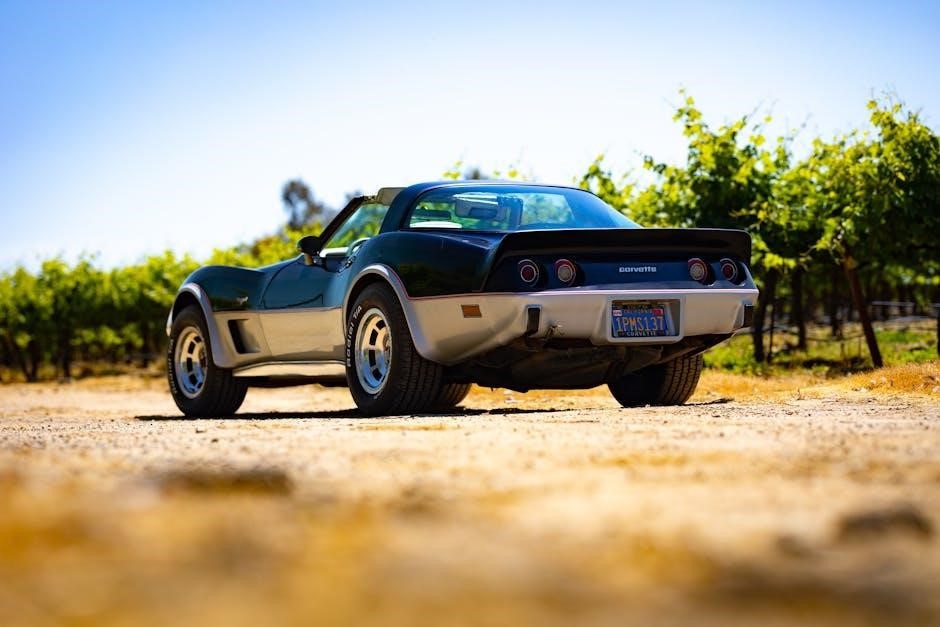
High-performance driving and track use significantly increase transaxle temperatures, potentially leading to fluid breakdown and component damage. Implementing a dedicated cooling system is crucial for maintaining optimal performance and longevity. Options range from simple auxiliary coolers, costing around $300-$800 installed, to more elaborate systems incorporating larger radiators and dedicated oil pumps.
These systems typically involve routing coolant lines to an additional heat exchanger mounted in the front fascia. Proper fluid selection, with higher thermal capacity, complements the cooling system. Monitoring transaxle fluid temperature via a gauge is recommended, especially during demanding driving conditions. Investing in a robust cooling system safeguards against premature wear and ensures consistent shifting performance.
Differential Options and Gear Ratios
Corvette transaxles incorporate a limited-slip differential (LSD) to enhance traction and handling, distributing power to both rear wheels. Several LSD types are available, including mechanical, Torsen, and electronic LSDs, each offering varying degrees of lockup and responsiveness. Gear ratios significantly impact acceleration and top speed; lower ratios (e.g., 3.42) prioritize acceleration, while higher ratios (e.g., 3.73) favor top-end speed and fuel economy;
Choosing the appropriate ratio depends on intended use – track-focused builds often benefit from shorter ratios. Aftermarket options allow customization to suit individual driving preferences. Regularly inspecting and servicing the differential, including fluid changes, is vital for maintaining optimal performance and preventing premature wear. Proper gear oil is essential for LSD functionality.
The Future of Manual Transmissions in Corvettes
The future of manual transmissions in Corvettes remains uncertain, given the industry-wide shift towards automatics and dual-clutch systems. While the C8 Corvette initially offered a manual option, its availability may be limited or discontinued due to declining demand and engineering complexities. However, enthusiast interest persists, potentially influencing future decisions.
Hybrid and electric Corvettes present unique challenges and opportunities for manual-like engagement. Simulated manual modes in electric vehicles, coupled with advanced torque vectoring, could replicate the driving experience. A fully manual transmission in an electric Corvette is less likely due to the nature of electric powertrains, but innovative solutions may emerge to satisfy purists.
Potential for Hybrid/Electric Corvette Transaxles
Hybrid and fully electric Corvette models necessitate reimagining the traditional transaxle. While a conventional multi-gear transmission might seem less crucial with electric motors’ broad torque curves, sophisticated systems will still be vital for optimizing efficiency and performance. Single-speed gearboxes are probable for many electric applications, but performance variants could employ multi-speed units.
For hybrids, integrating a transaxle with the internal combustion engine and electric motor presents complex engineering challenges. Torque splitting and seamless transitions between power sources require advanced control algorithms and robust hardware. Simulated manual modes, offering driver-selectable “gear” changes, could provide a familiar experience, even without a traditional clutch and gearset.
Resources for Corvette Transaxle Information
Corvette enthusiasts and technicians have access to a wealth of information regarding transaxle systems. General Motors’ official technical service bulletins (TSBs) and Customer Satisfaction Programs (CSPs), like N232427051, are crucial for understanding known issues and official remedies. Online Corvette forums, such as those dedicated to the C7 and C8 generations, provide valuable owner experiences and troubleshooting tips.
Specialized Corvette parts retailers often host technical articles and guides. Websites dedicated to automotive repair, like those offering diagnostic flowcharts, can aid in identifying problems. Furthermore, professional automotive technicians specializing in GM vehicles represent a valuable resource for complex repairs and diagnostics. Always verify information from multiple sources before undertaking any repairs.